
As part of the Australian Small Business and Family Enterprise Ombudsman’s inquiry into the country’s insolvency system, several insolvency frameworks from countries that function under a similar justice system to Australia’s were reviewed. This included pre-packs in the UK. That’s where Insolvency Support Services came in. Our director Eileen Maclean took part in a virtual round table discussion with the Ombudsman’s team and members of the IPA’s SERL Committee (Standards Ethics and Regulatory Liaison) to provide information and offer perspectives and advice.
We’re very pleased to see that the resultant Insolvency Inquiry Report recommends a suite of changes to current insolvency practices that aims to achieve the best possible outcomes for small and family businesses in financial trouble in Australia. See pages 41 to 42 of the report for the review of UK frameworks.
Insolvency Support Services is partnering with Insolvency Insider to run a series of banner adverts in its weekly e-newsletter to the insolvency profession and related sectors. Look out for our adverts in the coming weeks! Below are some examples.
If you would like to receive the Insolvency Insider weekly e-newsletter free of charge, click here to subscribe.


Video: https://vimeo.com/480277801

ISS Training, Insolvency Support Services’ training division, has been shortlisted in the Education/Training Provider of the Year category in the UK TRI (Turnaround, Restructuring and Insolvency) Awards 2020.
Independently judged by a panel of leading industry professionals, these prestigious annual Awards recognise the range, variety and best practice of work undertaken by TRI professionals UK-wide.
Eileen Maclean, Insolvency Support Services’ founding director, commented: “We are delighted to be shortlisted for this TRI Award and greatly appreciate the judges’ recognition of our commitment to UK insolvency training. Thanks very much to all our clients, delegates and partners for their invaluable support and fantastic feedback over the past year. Many thanks too to our amazing team for their hard work and dedication.
It’s been another busy 12 months for ISS Training. In addition to significantly enhancing our online learning offering with a new dedicated training website and our new ISS Moodle School, we pivoted successfully in response to Covid-19 to deliver all our courses online instead of in person.
Particular highlights for us in the past year have been achieving Partner in Learning status with ICAEW, partnering with IPA to deliver training to members throughout the UK, and supporting several R3 learning events.”
TRI Awards 2020 winners will be announced in a Credit Strategy digital broadcast from London on 9 December 2020.
We very much appreciate the consistently excellent feedback on ISS Training courses and trainers that we receive from clients and delegates. Here’s just a selection of comments from the past year:
“ISS Training courses are presented by knowledgeable and experienced people in a clear and practical manner. The range of courses available fits the budgets of different sized firms and helps greatly to complete my CPD requirements.”
“I enjoyed the course and it was very clear. Access to good guidance for a reasonable price in the insolvency field is in my view exceptionally limited. ISS Training gives good relevant courses.”
“Reasonable cost, flexible attendance, good quality and highly relevant information delivered.”
“The session yesterday was really informative and helpful. Eileen is really enthusiastic, and it comes across throughout the day which makes the sessions enjoyable. The handouts are really good too.”
“These were two very informative and productive days for me. I truly appreciate the trainer’s time, effort and patience.”
“Eileen was very engaging and made the course interesting, enjoyed the small group as it made it easier to speak – answering/asking questions.”
“Great overview of insolvency! Very informative.”
“Great way of learning. Speaker was very clear. Happy with overall training.”
“Really good and informative. Excellent handouts.”
“I found that the course was really engaging, despite having to change the process part way through and have virtual training sessions (due to Covid-19) instead of in a classroom setting, I still found that I was receiving the same quality of training as I first received at the start of the year.
The presentation slides were easy to follow, and it also helped to have dates to stick to in terms of where I should be up to with the modules to help keep me on track, along with regular meetings to cover each module.
After each block of 3 modules, there was a re-enforcement day in which we covered the previous modules and worked through practice exam questions, these would then get marked and we would discuss the answers afterwards. I found these sessions particularly helpful in preparing for the exam.
Overall, I felt well equipped for the exam and couldn’t fault the training that I received. I would definitely recommend the course for CPPI training.”
“We would not have passed the CPI/CPPI exams without you!”
“You made it an enjoyable course and I appreciate the ways you helped us understand all the different
elements.”
“Thank you for all of your efforts in keeping the JIE training as close to normal as possible in what has been an extremely difficult time during Covid-19. It is greatly appreciated.”
“A huge thank you for all your help over the last 7 or so months. I know with Covid it wasn’t how any of us expected this year to go but I thought everything was adapted so well and I certainly felt supported in the run up to the exams.”
“Using ISS Training’s course has meant that we have been able to meet necessary staff training demands with an approach that has allowed our staff to gain the essential knowledge at their own pace working around the ongoing demands of their ‘day job’. The internal feedback I have received has all been very positive, complimenting in particular the clarity of presentation and ease of assessment.”
“I have enjoyed working with ISS Training and greatly appreciate all the effort you have put in for us.”
“The podcast was excellent, well placed, good content and excellent diction which makes it so much easier to follow.”
“You managed to deliver with perhaps the clearest voice I have heard used – without becoming monotonous and boring – a challenge and well done for achieving that.”
Our training is organised into eight streams: Compliance Awareness, Exam Training, Foundations, Masterclasses, One Hour Series, Personal Development, Practice Management and Technical Updates.
Explore all our courses on our dedicated training website.


Insolvency Support Services Directors Eileen Maclean and Alison Curry are speaking about the New Ethics Code at the IPA’s 2020 Virtual Roadshows.
For more information and to book your place, click here.
Following the introduction of the Corporate Insolvency and Governance Act 2020 (CIGA) on 26 June 2020, Insolvency Support Services undertook research on the insolvency profession’s views of the moratorium and restructuring provisions in the new legislation. This paper provides a summary of the results of our research. To download a copy, click here.
A total of 42 respondents participated in the research. They represent a cross-section of specialist insolvency practitioner (IP) firms as well as accountancy and law firms with insolvency and recovery practices, ranging from small to very large organisations, across the whole of the United Kingdom.
Use of the Provisions
It is clear that, at the time of our survey, most respondents did not know if they were going to use either of the new rescue procedures (60% Moratorium, 54% Restructuring). Of those who are intending to use the moratorium (31%) and restructuring (20%) provisions, there is a clear difference in the size of company in relation to whom it would apply: Moratorium – large 15%, SME 38%, Any company 46%, compared to Restructuring – large 63%, SME 0%, Any company 38%.
Moratorium Provisions
Proponents of the moratorium agree or strongly agree that its main benefits are (in order): speed and ease of entry, the ability to extend, and the valuable breathing space it will give companies.
Of those not minded to use the moratorium, the main reasons cited are the costs of monitoring being disproportionate to the benefits, and that directors do not consult early enough to get the benefit of a moratorium. The latter is a long-standing complaint in insolvency and reflects the old adage that the sooner someone seeks assistance in relation to their business, the higher the chance of rescue. For the moratorium to be effective therefore, directors need to seek advice early.
The moratorium can only be overseen by an IP, so despite responses, it will be incumbent on us to use the moratorium provisions, or we risk losing the exclusivity of the role to other professionals. However, the cost is going to be an issue, as is the actual remit of the Monitor.
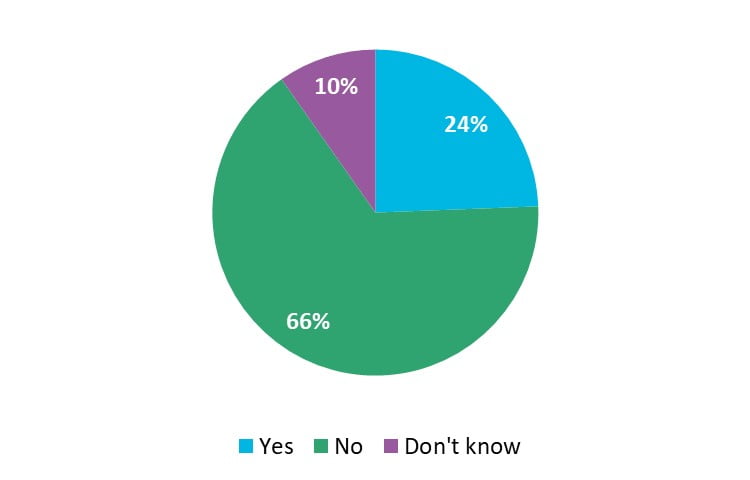
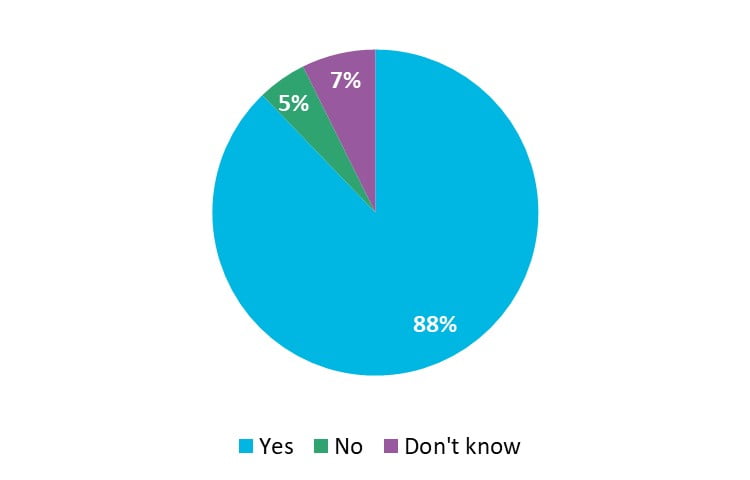
It seems likely that a majority of moratoriums will be extended past the original 20 business days (as anticipated by 66% of respondents). Intuitively this seems right: unless a company can get very quick confirmation from its creditors to it proposals, in whatever form they might take, the vast majority of respondents (88%) think that a second period of 20 business days will be required.
Restructuring Provisions
It is clear that most respondents see the new restructuring tool being used at the higher end of the market. Of the respondents who will not be using the new provisions, 91% stated that it is because their client base is predominantly SME companies and directors. Although the SME market is not precluded from making a court application in terms of the new Part 26A Companies Act provisions, the Insolvency Service shares the view that this is intended for the large company sector. That means only certain firms (advisory and legal) will be assisting companies in this work.
Those intending to use the provisions see the main benefits as the ability to bind dissenting creditors to the plan, and the ability to remove creditors with no economic interest in the company. It will be interesting to watch the market’s response, as well as that of the courts, to the impact these new provisions will have on lenders and suppliers going forward, once the implications are fully understood.
1. Will you be using the new moratorium provisions?
Three in five (60%) of respondents indicated that they do not know if they will be using the new moratorium provisions, while 31% said that they will be using them, and 10% stated that they will not.

% respondents (%s do not add up to 100% due to rounding)
2. To what extent do you agree that the new moratorium provisions are likely to bring the following benefits?
Those respondents who said that they will be using the new moratorium provisions mostly agreed that they bring several benefits, with all respondents agreeing that speed of entry into moratorium is an advantage of the new provisions. However, a small number of respondents did not agree that the provisions will provide ease of entry into moratorium, valuable initial breathing space or the ability to extend as circumstances require.

% respondents (%s do not all add up to 100% due to rounding)
3. For what size of company do you anticipate using the new moratorium provisions?
Just under half (46%) of the respondents who said that they will be using the new moratorium provisions anticipate using them for any size of company, while 15% expect to use them mainly for large companies and 38% mainly for SMEs.

% respondents (%s do not add up to 100% due to rounding)
4. Why will you not be using the new moratorium provisions?
Those respondents who said that they will not be using the new moratorium provisions cited several reasons, the main ones being the cost of monitoring being disproportionate to the benefits and not being consulted early enough by directors to get the benefit of a moratorium.

% respondents
5. Do you think that the initial period of 20 business days will be long enough?
Almost two thirds (66%) of respondents think that the initial period of 20 business days will not be long enough, while just under a quarter (24%) think it will be sufficient, and the remaining 10% do not know.
% respondents
6. Do you anticipate that an extension of a further 20 business days will happen in most cases?
The majority (88%) of respondents anticipate that an extension of a further 20 business days will happen in most cases. Only 5% do not expect an extension, and 7% do not know.
% respondents
7. Will you be using the new restructuring provisions?
Just over half (54%) of respondents indicated that they do not know if they will be using the new restructuring provisions, while 27% said that they will not be using them, and only 20% stated that they will.
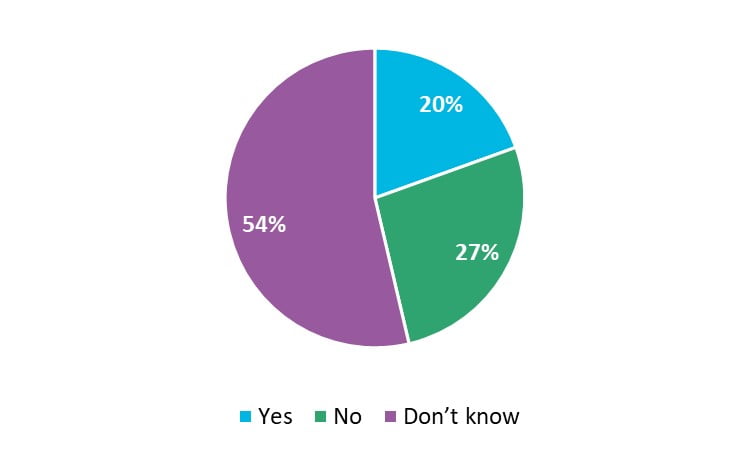
% respondents (%s do not add up to 100% due to rounding)
8. To what extent do you agree that the new restructuring provisions are likely to bring the following benefits?
Those respondents who said that they will be using the new restructuring provisions mostly agreed that they bring several benefits. The ability to bind dissenting creditors to plan and to remove creditors with no economic interest in the company were seen as benefits by all respondents.
Most respondents also viewed voting thresholds, the ability of the court to sanction the plan not withstanding voting thresholds not being met and the wide scope of restructuring possible as benefits of the new restructuring provisions.
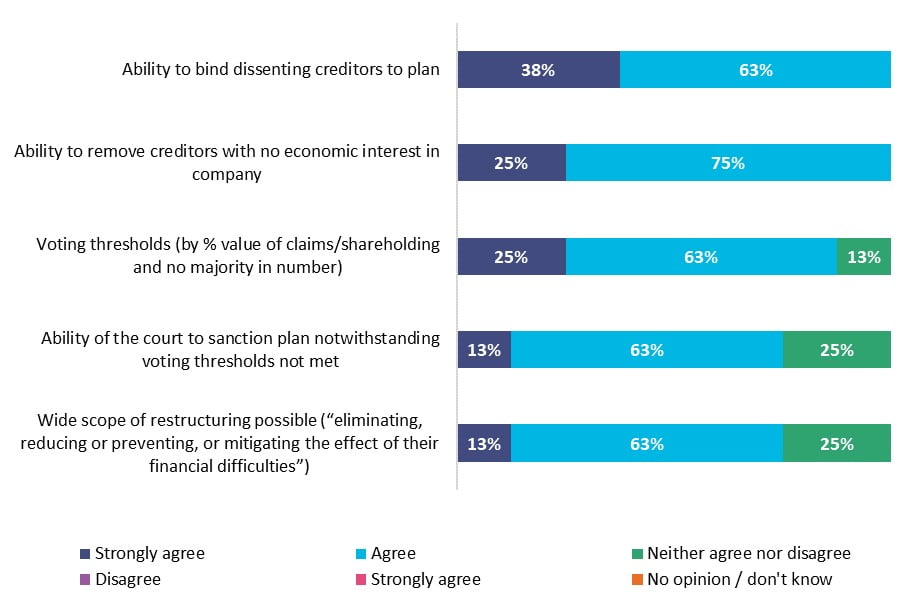
% respondents (%s do not all add up to 100% due to rounding)
9. For what size of company do you anticipate using the new restructuring provisions?
Just over three in five (63%) respondents who said that they will be using the new restructuring provisions anticipate using them mainly for large companies, while 38% expect to use them for any size of company and none anticipate using them mainly for SMEs.
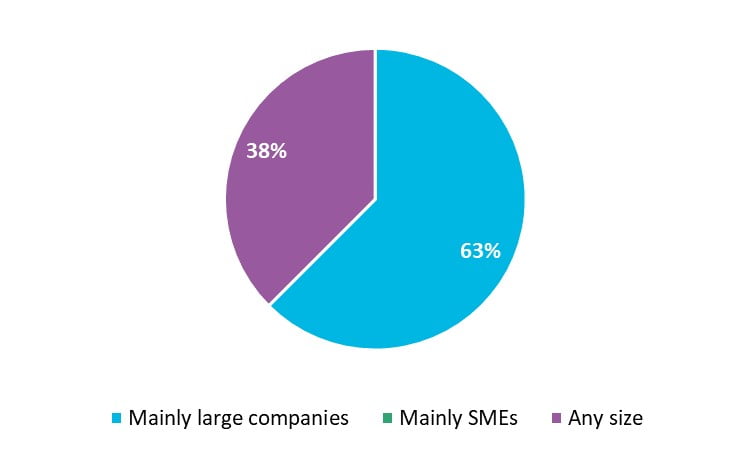
% respondents (%s do not add up to 100% due to rounding)
10. Why will you not be using the new restructuring provisions?
Those respondents who said that they will not be using the new moratorium provisions cited several reasons, with their client base being predominantly SME companies and directors by far the main one.
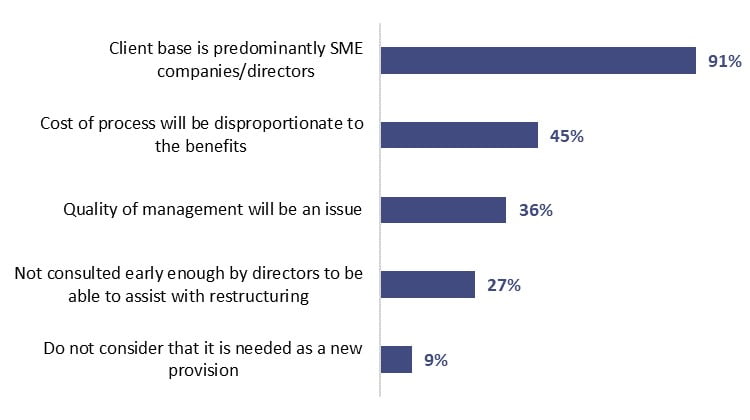
% respondents
If you have any questions about this research or would like to discuss how Insolvency Support Services could support you and your firm in dealing with and using the new legislation, please do not hesitate to contact us.
As well as a recorded webinar, Corporate Insolvency and Governance Act 2020: An Introduction, already available to watch online at a time that is convenient to you, our Moratorium checklist is available now and the supporting document pack will be available in September. Please contact us at [email protected] for more information.
The Corporate Insolvency and Governance Act 2020 (“the Act”) came into effect on 26 June 2020, being the UK Government’s response to the impact of coronavirus on business. The Act introduces permanent new solutions for businesses facing financial difficulty including a new moratorium procedure for use pre-CVA or restructuring, or as a standalone opportunity for a company to rectify its financial position.
Our Moratorium Checklist is now available for purchase. Split into six sections, this comprehensive work programme sets out the process for obtaining a moratorium, actions on appointment, monitoring the company’s affairs, termination, extension and exit, conducted under the current coronavirus provisions of the legislation. Requirements are clearly delineated as the responsibility of the monitor or the directors and matters for consideration throughout the moratorium period are set out in detail. As with all of our checklists, it is hyperlinked to the relevant statutory provision or guidance.
The checklist is available now for just £750 plus VAT.
Order now by email at [email protected] or by phone on 0845 601 7570 and your checklist will be supplied on receipt of payment.
Our supporting document pack will be released in September, and will retail at just £750 plus VAT. Comprised of pro-forma documents for use by the monitor or the company as applicable, it will be hyperlinked to the checklist. You can pre-order the supporting document pack when purchasing your checklist.
And remember, if you attended our One Hour Series on the Corporate Insolvency and Governance Act 2020, then the cost of the webinar is redeemable against the purchase price of the checklist and document pack to a maximum of five participants. If you haven’t enrolled, and would like to do so, please contact Danielle Kelly on [email protected]. Up to five enrolments will be included in your purchase.
For just £1,500 plus VAT, you can be ready to confidently apply the new moratorium provisions.

Insolvency Support Services is pleased to have achieved certification under the Cyber Essentials scheme.
Jointly developed by the UK Government and the cyber security industry, Cyber Essentials helps organisations implement essential levels of protection against cyber attacks, demonstrating that they take cyber security seriously.
Thanks very much to Diddo for their expertise and support in helping us complete the assessment and facilitating the certification process.

Insolvency Support Services (ISS) is conducting research among stakeholders in the UK insolvency market on the new moratorium and restructuring provisions in the Corporate Insolvency and Governance Act.
We are gathering views on the likely usage of the provisions and the potential benefits as well as the reasons why they might not be used.
Please take part in the survey by clicking here before 24 July 2020.
If this link does not work for you, please cut and paste this url into your browser: https://www.surveymonkey.co.uk/r/ISSyourview
This survey should take less than five minutes to complete. All responses will be treated confidentially.
All respondents will receive a summary of the findings and be entered into a prize draw for the chance to win a free ISS webinar as well as a £50 voucher for an online retail store of the winner’s choice.
Please note that the survey will be temporarily unavailable from 8.00 am–8.00 pm on 3 July.
If you have any questions, please email [email protected]
In our One Hour Series webinar Technical Short: Corporate Insolvency and Governance Act 2020: An Introduction on 17 July we will summarise the changes and how they might be applied by the profession. Click here to book.
The new moratorium process outlined in the Corporate Insolvency and Governance Act has now come into effect, bringing a very welcome 40 or more days’ breathing space for companies while they and their professional advisers consider their restructuring options.
Thanks to campaigning from the profession, in particular R3, the Act has seen some shift from the original proposals first outlined in 2017, not least that the monitors of these moratoria must be licensed insolvency practitioners. Had this not been the case, it could have seriously eroded the vital role that insolvency professionals play in corporate restructuring, and we should be grateful to all those who campaigned.
We will be constructing document packs and checklists now that the legislation has come into force and rolling out our compliance support and training offering. But as with any new legislation, the devil is invariably in the detail, and some of the detail raises concern, particularly around the perennially thorny issue of IP fees.
The monitor must be an IP and the monitor is expressly stated to be an officer of the court. However, while SIP 9 currently applies to “all forms of proceedings under the Insolvency Act”, it expressly refers to the fees of an insolvency office holder, and a monitor may not fall into that category. SIP 9 could usefully be amended to clarify this ambiguity and the current consultation on the revision of this SIP would be an opportunity to do so.
But even if the monitor’s fees are to be subject to SIP 9, what of their fees for advising the company and forming their opinion, prior to their formal appointment as monitor? Here the position becomes less clear.
Entering the moratorium gives the company a payment holiday from most of its pre-moratorium debts, subject to some exceptions. A key exclusion for obvious reasons is the remuneration and expenses of the monitor. However, the provision goes on to state that “the monitor’s remuneration or expenses does not include remuneration in respect of anything done by a proposed monitor before the moratorium begins”; so it would seem that any pre-appointment charges in relation to formulating the very opinion that kickstarts the moratorium are potentially subject to the payment holiday. IPs will, therefore, need to ensure that their engagement letters are very clear about what exactly the monitor’s fees include.
There are then restrictions on the company in making payments during the moratorium period in respect of pre-moratorium debts which are subject to a holiday, to the greater of £5,000 or 1% of its debts, subject to the monitor giving their permission for higher amounts to be paid. Could this place IPs in a rather conflicted position in giving permission to discharge their own pre-appointment costs?
But what if the monitor’s fees aren’t paid at all? The newly inserted sections 174A and SchB1 para 64A give super-priority to moratorium debts (i.e. those incurred during the moratorium period) and pre-moratorium debts for which no payment holiday is granted (i.e. the monitor’s fees). This super-priority applies in any succeeding winding up or administration proceedings commenced in the 12 weeks following the end of the moratorium. Further, a new s4A provides that any proposal for or modification to a CVA under which both the moratorium debts and the pre-moratorium debts for which the company did not have a payment holiday are to be paid other than in full is prohibited. So, it seems that the monitor will be paid ahead of any subsequently appointed office holder and IPs will need to check that there is not a prior monitor ranking ahead of them when taking a new instruction.
It appears that the only parties capable of challenging the monitor’s fees are a subsequently appointed liquidator or administrator and that challenge involves an application to court, which could be costly, and assumes an alternative IP in the succeeding role. Additionally, while the moratorium is in force, only the directors can instigate the winding up of the company or seek to appoint an administrator, so they get to choose their IP if that rescue proves impossible.
So, what if the monitor, on the evidence now available to them, changes their view about the viability of the company and recommends that the directors take steps to place it into liquidation or administration? The newly revised Ethics Code contains enhanced provisions around the potential conflicts presented by sequential appointments, but by no means precludes them. Nor does the new legislation.
Therefore, might we see the birth of the post-moratorium pre-pack, once it has become evident that the business, rather than the company can be saved, thereby justifying a shift from moratorium into administration? In some cases, no doubt this would be entirely justified, but the lack of external oversight in respect of fees may create the potential for abuse (both actual and perceived).
An amendment to the bill proposing the insertion of a new paragraph 74A into Schedule B1, requiring the use of the pre-pack pool in all pre-pack scenarios was withdrawn at committee stage, so it would seem that the pre-pack will survive unscathed into the new era of moratoria. Much will rest on the shoulders of IPs to use these new tools responsibly, and in the longer term, more will rest on the shoulders of regulators to ensure that they do so.
Click here to take part in our short survey. It should take less than five minutes to complete. As well as receiving a summary of the findings, you will be entered into a prize draw for the chance to win a free ISS webinar and a £50 voucher to an online retail store. The survey will end on 24 June 2020. Please note that the survey will be temporarily unavailable from 8.00 am–8.00 pm on 3 July.
In our One Hour Series webinar Technical Short: Corporate Insolvency and Governance Act 2020: An Introduction on 17 July we will summarise the changes and how they might be applied by the profession. Click here to book.